By Brenda S. Cox
“In a part little known of the County of Warwick, a very worthy Clergyman lately resided. The income of his living which amounted to about two hundred pound, and the interest of his Wife’s fortune which was nothing at all, was entirely sufficient for the Wants and Wishes of a Family who neither wanted or wished for anything beyond what their income afforded them.”—“The Generous Curate,” Jane Austen
I recently got to present at a linguistics conference in Spain on the language used in Austen’s teenage writings. I’ll be posting more about that conference next week on Jane Austen’s World.
Jane Austen used language exuberantly and ironically in her Juvenilia. These are stories that she wrote as a teenager, not for publication but to entertain her family and friends. They tend to be exaggerated and full of women who are transgressing the normal boundaries of society. Girls in the stories reject all advice on ladylike behavior. We see them overeating, drinking, stealing, accepting two offers of marriage, even involved in murder, sexual misdemeanors, and violence. They are funny, as Mr. Collins and Lady Catherine de Bourgh are funny, for their excesses.
The conference offered many interesting talks. I will share my own here. You may have read in my posts or in my book Fashionable Goodness about “faith words” in Jane Austen. These are words that had strong religious connotations in her time, but are rarely used that way today. I decided to compare how they are used in the humorous Juvenilia to how she used them more seriously in Sense and Sensibility later on. (Note that spelling was not yet standardized at this time, and Austen spelled much as other writers of the time did, writing, for example, “beautifull” and “freindship.”)

Religious Vocabulary
Austen’s religious vocabulary is important because, in her life, her religious faith and specifically the Church of England, England’s national church, were important to her. Her father and two of her brothers were clergymen, what we might now call church ministers or pastors, and more than a hundred of her relatives and friends were also clergymen. We meet clergymen in all her novels and in the Juvenilia.
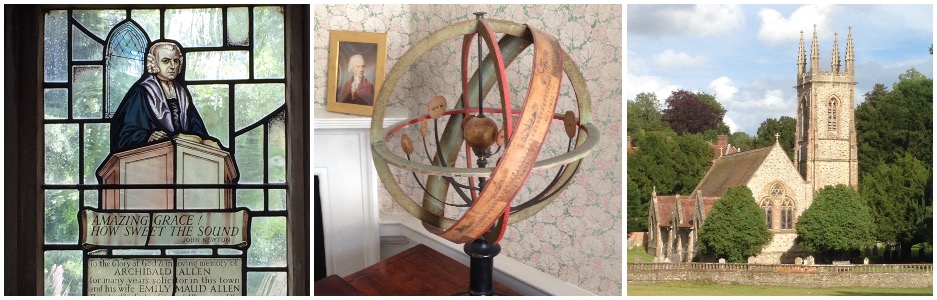
Austen was closely connected with the church at Steventon, where her father was rector as she was growing up, and the church at Chawton, near where she spent her final years. We know she enjoyed reading devotional books and sermons, she attended church regularly, she appreciated paintings of religious subjects, and it appears that her family prayed and read the Bible together twice a day, using the Book of Common Prayer, the handbook of the Church of England.
Austen wrote three beautiful prayers herself, and we can also see indications of her personal faith in her letters and in her novels. Austen’s religious faith strongly influenced her life, her worldview—and her writing. (For more, see “Was Jane Austen a Christian?”)
Words Changing Meanings
Jane Austen wrote her fiction more than two hundred years ago. Not surprisingly, English has experienced semantic change during that time—change in what words mean. We see this discussed in Northanger Abbey when Henry Tilney is teasing Catherine for using the word “nice” in a way that was new in England. It used to mean scrupulously exact. , but the meaning was changing to its modern meaning of pleasant or good.
In Austen’s religious vocabulary, some words have changed meaning because of changes in their referents, the things they refer to. Reorganization in the Church of England has altered the meanings of words related to the church.
For example, in “The Generous Curate”, a clergyman has a church living worth about 200 pounds a year. We still refer to someone making a living, but in Austen’s time a church living meant a job as rector or vicar of a parish, the area served by a church. Another clergyman is a curate, which meant an assistant or substitute clergyman receiving a low salary, here fifty pounds a year, rather than income from tithes.

In the story “Catharine”, or “The Bower,” another clergyman has the living of Chetwynde. He spends his time quarreling with Mrs. Percival’s steward and tenants concerning tithes. The people of the parish were legally required to pay the clergyman 1/10 of their agricultural income, a tithe. A rector, like Mr. Collins, had the right to all the tithes. A vicar, like Mr. Elton, stood vicariously in the place of a secular rector, and received only part of the tithes. Tithes are now a voluntary donation instead of a required tax—the meaning has changed.
The clergyman of Chetwynde is embarrassed that, rather than living on an inherited estate, he had to take orders for a country living. That meant he was ordained by a bishop into the order of the church. Today taking orders would more likely mean following commands.
The exact meanings of these words have changed, since what they refer to has changed, but we still know they are related to the church.
Religion, But Not Obtrusive
One early reviewer of Austen’s novels, a clergyman named Richard Whately (wait-lee), wrote that Jane Austen “has the merit of being evidently a Christian writer: a merit which is much enhanced by her religion being not at all obtrusive” (meaning not obvious).
Austen does not generally spell out her morals, as other writers of her time did, but she is still communicating moral messages. And she often uses religious language, some of which we recognize today and some of which we don’t.
Direct Religious Vocabulary
Words that we would still recognize as religious are conscience, atone, repent, and thank Heaven or thank God. These are used more frequently, and more seriously, in Austen’s Sense and Sensibility than they are in the Juvenilia. They are sometimes used ironically in Sense and Sensibility as well, but they are much more often used ironically in the Juvenilia, where Austen is more strongly ridiculing the cult of sensibility.
| Number of times used in: | Juvenilia | Sense and Sensibility |
| Conscience | 2 | 13 |
| Atonement/atone | 2 | 7 |
| Repent/penitence | 7 | 6 |
| Thank heaven/God | 3 | 4 |
(Juvenilia in this article also includes Austen’s early works, Lady Susan and “Sir Charles Grandison.”)
In Sense and Sensibility, Marianne seriously talks about making atonement for her selfishness and sets out a program of improvement.

In the Juvenilia, though, in “Frederic and Elfrida”, Elfrida describes the ugly but amiable Rebecca, saying: “I cannot refrain from expressing my raptures, at the engaging Qualities of your Mind, which so amply atone for the Horror with which your first appearance must ever inspire the unwary visitor.” Here, humorously, Rebecca “atones” for her greasy hair and “forbidding squint” with a discussion of muslins.
Conscience, atone, and repent are all words that we would still easily recognize as religious.
Indirect Religious Vocabulary
Other words, though, have shifted in meaning over time because of cultural changes. Duty, exert, principle, reflection, and candor had strong religious meanings during Austen’s time, though they could also be used in other ways. We now use them with predominantly secular meanings. The religious meanings have become “obsolete” or “rare” according to modern dictionaries. That’s probably because social shifts have secularized English-speaking cultures, and thus our vocabulary. Religious faith is no longer a central facet of our societies. I call these “faith words,” since they indicate religious faith if we understand them according to their historical meanings.
| Number of times used in: | Juvenilia | Sense and Sensibility | Mansfield Park |
| Duty | 17 | 19 | 35 |
| Exert, exertion | 8 | 32 | 22 |
| Principle/ unprincipled | 3/3 | 11/3 | 24/0 |
| Meditation, serious reflection (implying prayer or self-examination) | 14 | 16 | 20 |
| Candour, candid | 4 | 6 | 4 |
I’m comparing uses of these words in the Juvenilia with their usage in Mansfield Park and Sense and Sensibility, which have the most obvious religious themes of Austen’s novels. You can see that Austen uses these words more often in her complete novels.In my next post, we’ll look at some examples of how she uses these words in the Juvenilia, compared to in her first published novel, Sense and Sensibility.
In the meantime, you might want to read earlier posts about these words:
Serious and Fanny Price (includes “serious reflection”)
Or, for a more serious article, “Faith Words in Sense and Sensibility: A Story of Selfishness and Self-Denial.” Or for a more in-depth view, chapter 3 of Fashionable Goodness: Christianity in Jane Austen’s England.
You will see next week that in her teenage writings, Austen uses all these words much less seriously!
What is your favorite use of a direct religious word, like atonement or conscience, in Austen’s writings?
Covers of the Juvenilia are editions from Juvenilia Press. These versions are entertainingly illustrated, very fun ways to reread the Juvenilia! You can buy them from Jane Austen Books in the US or directly from Juvenilia Press in Australia. They make great gifts for children, grandchildren, or yourself.
Discover more from Faith, Science, Joy, and Jane Austen
Subscribe to get the latest posts sent to your email.
 Faith, Science, Joy, and Jane Austen