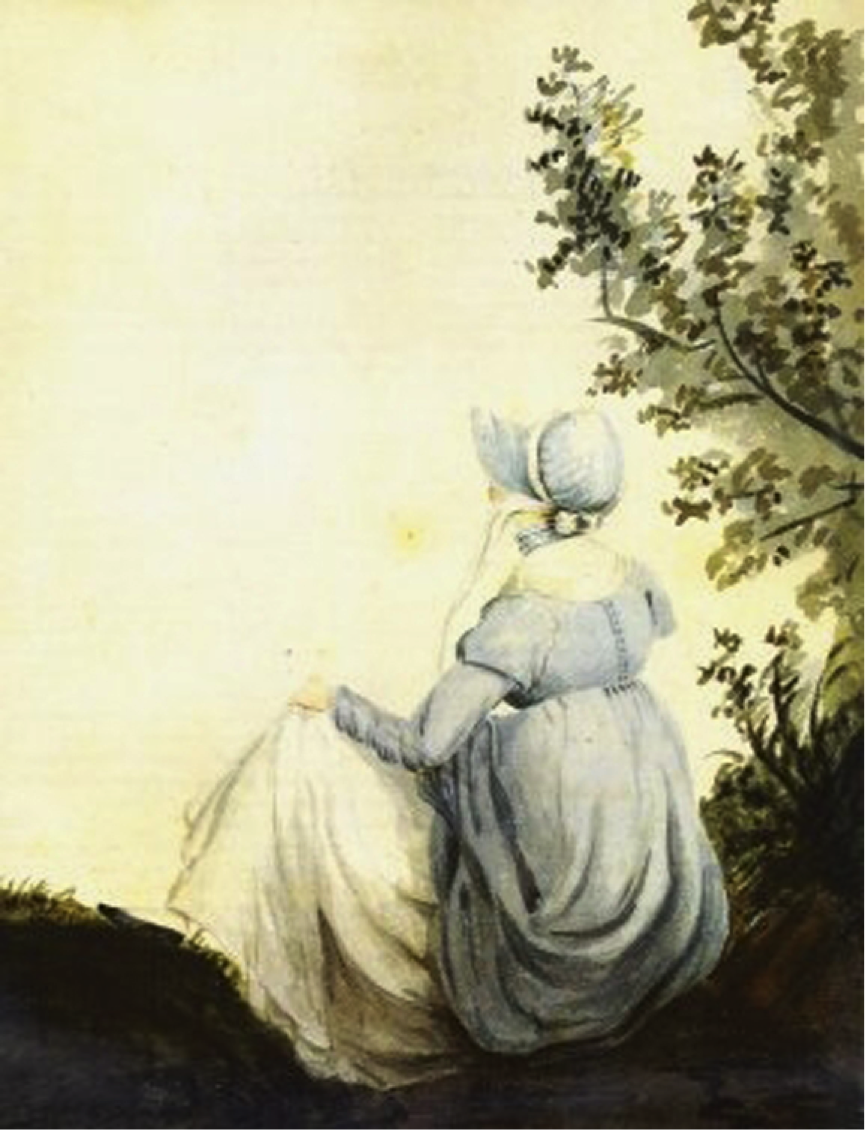
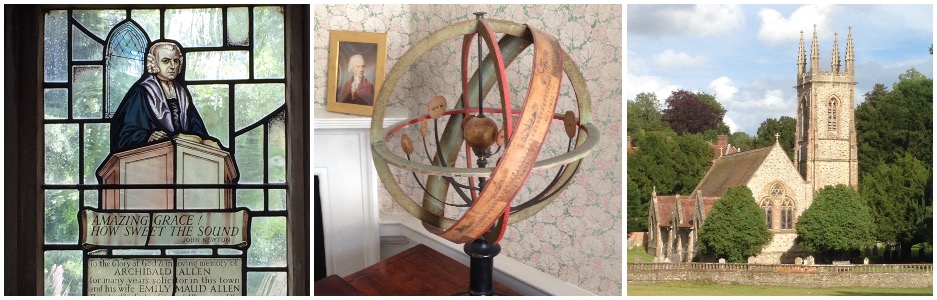
A Sermon by the Rt Revd Dr Christopher Herbert on the 250th anniversary of Jane Austen’s death. St Nicholas, Steventon, Hampshire, July 5th 2025
It is a huge and daunting privilege to have been asked to preach here today and I thank James Russell, the Vicar, and Canon Michael Kenning for their generous invitation…
*************
In the National Gallery of Washington DC , there is a hauntingly lovely painting of a young woman. No one knows her name, but the artist was Rogier van der Weyden who created the portrait in 1460. She is wearing a semi-transparent veil over a small cap. Two of her fingers are enhanced by gold rings. Her skin is flawless, her eyes look down. She seems to be in that state of mind where thoughts are beginning to turn into prayer. So, although as viewers we are looking at her, she is not returning our gaze. And we can go no further. Quite properly, we remain on the surface.
It is a painting of human interiority. After gazing at it for a while, we tiptoe away and leave the young woman to her prayers…

Hold that picture in your mind for a moment…
A couple of minutes ago I used the word ‘privilege’ about preaching here today, but you too will be feeling something similar…you and I are in the very place where George Austen took the services, where Jane, her mother and her siblings heard the Bible read, received the sacrament, and prayed.
And even though in our imaginations we can picture them seated where we are now seated, that is as far as we can go. As with the van der Weyden painting, we feel we must tiptoe away, because prayer is deeply sacred…it is how, in our human inadequacy, we reach out towards the Divine. Our own inner mysteriousness fumbles and stumbles towards the holiness and beauty of God.
And yet, although we cannot intrude upon the inner lives of Jane and the family as they pray, three of Jane’s own written prayers, as you know, have come down to us. They are prayers which approach God with humility. Her natural, mischievous, bubbling wit, are held in check as she ponders what to say. Like all prayers, Jane’s prayers are a form of condensed theology. And therefore, the words chosen really matter.
So, we can picture her seated at her desk, goose-quill pen in hand, gazing for a while into the middle distance before dipping the pen slowly into the ink pot, and then writing the opening words of her prayer on a sheet of paper: Give us grace, Almighty Father, so to pray as to deserve to be heard…
It is such a revealing phrase: the act of prayer, she implies, is only possible if God informs and shapes our hearts and souls. We begin from grace in order to move towards grace…
And she amplifies this further: ‘To address thee with our hearts, as with our lips…’
Prayer is not simply a matter of choosing the right words and putting them in the right order, each word pulling its weight…rather, Jane refers to prayer as deriving from the depths of our being, and out of those depths we move towards God…
But then she describes one of the characteristics of God: ‘Thou art everywhere present…’ That is, God is in the muddy lanes of Steventon, God is in the rumbustious noise of the boarding-school boys rampaging and laughing through the Rectory, God is present in her father’s kindliness, in her mother’s wit and preoccupations with ensuring that the laundrywoman has got the sheets properly dry, and is even (even?) present in the scratching of words on paper… God is not an absent, uncaring and distant Deity, He is embedded in the very stuff of life. But this is not a soft focus pantheism either: God is one ‘from whom no secret can be hid…’ At the very heart of Jane’s understanding of God is a morality which requires from us, his creatures, a moral response…and yet, we fail, we fail. ‘ Look with mercy’ writes Jane, ‘ on the sins we have this day committed…’
She follows this cry from the heart, by laying emphasis on us becoming more self-aware, on looking at our lives with candour, on recognizing our recurring faults, on not ‘deceiving ourselves by pride or vanity…’
But I can’t stop there, with a trumpet blast of hagiographic [saint-like] piety, because one of her great gifts is her ability in her novels not only to poke fun at, and explore, the foibles and vanities of humanity, but also to rejoice and laugh at us and with us. Think for example, of the delightful and garrulous Miss Bates…Jane herself and the family, must have laughed aloud…
So, is there any link between the solemnity of her prayers and the glorious vivacity of her novels?
I think that there is: and it’s created by her delicious sense of perspective: a perspective which is derived from her understanding of God revealed in Christ, and from her deep awareness of God’s mercy. And therefore, (let me repeat) and therefore, that gave her the inner freedom to delight in the rich complexity of human life. As you know, her novels are characterized by insight, wit, and grace, literary virtues which flourish and dance, not in spite of, but because of, her profound confidence in the overwhelming beauty of God’s being.
So: alleluia for Jane’s prayers, alleluia for her writings, and alleluia for her faith. They are all of a piece, and by them we are enriched immeasurably. Thanks be to God.
[From Brenda–Amen. I just wanted to share this with you all, as the preacher shared it with me. Posted with Dr. Herbert’s permission. He is the author of Jane Austen’s Favourite Brother, Henry, which I will be reviewing on Jane Austen’s World in September.]
Discover more from Faith, Science, Joy, and Jane Austen
Subscribe to get the latest posts sent to your email.
 Faith, Science, Joy, and Jane Austen