Reviewed by Brenda S. Cox
“To sit in the shade on a fine day, and look upon verdure [greenery, plants], is the most perfect refreshment.”—Fanny Price, Mansfield Park
What did it mean for a woman to follow her heart and use her gifts in Jane Austen’s England? Both Julie Klassen and Cecily Van Cleave seek answers to this question in their lovely novels. These are not Austen variations, like many of the books I review, but they are in the same time period. They also have something of the same style: beautiful, clean, not preachy but with glimmers of faith. And these particular books teach us something about science of the time, particularly women’s involvement in the sciences, woven seamlessly into the stories.
Yewspring by Cecily Van Cleave
Let’s start with a new novel, Yewspring, by a new novelist, Cecily Van Cleave. I had the privilege of meeting Cecily at the JASNA AGM in Victoria. She led a fascinating special session, very well attended, on “Beyond the Garden Wall: Priscilla Wakefield, Women in Botany, and the Intersection of Art and Science During the Austen Era.” She’s obviously done her homework and thoroughly researched botany and women scientific writers during this period. (For more background on this topic, see my post, “Lady Botanists and the Chawton House Virtual Garden Festival.”)
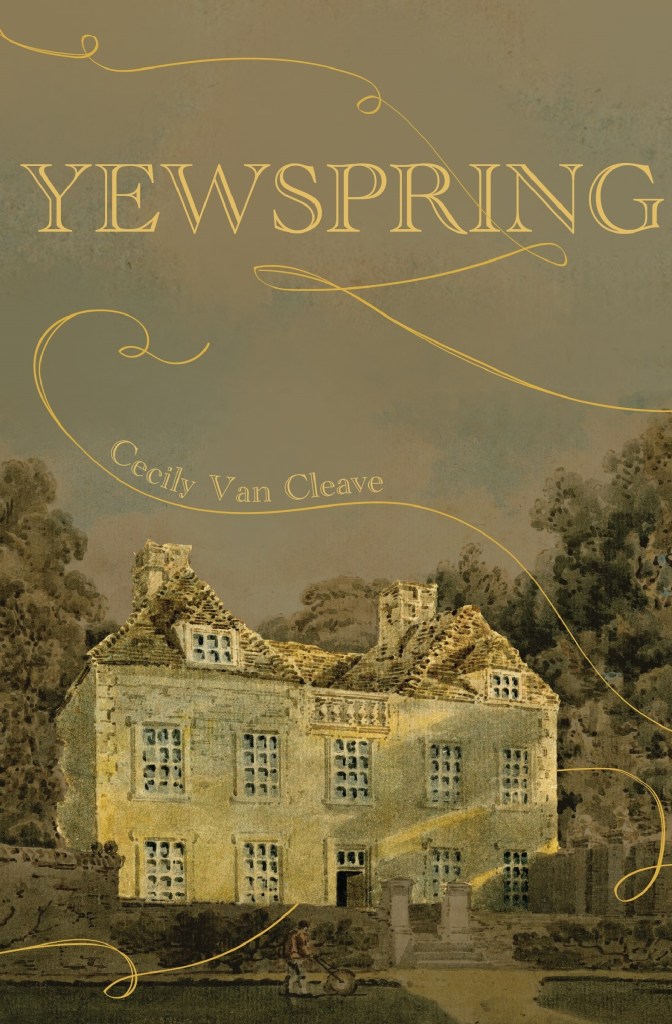
I had the privilege of reading an advance copy of Yewspring. The heroine, Clara, loves to draw detailed pictures of plants. She reads about botany and is teaching herself Latin and trying to improve her French in order to read botanical texts. Clara is slated for a more-or-less-arranged marriage in order to stay at her beloved estate, Yewspring. It is entailed to a distant cousin (shades of Mr. Collins!). She is involved in activities on the estate like helping deliver animals and taking care of tenants in need. But things change, and she has to decide what is most important to her, and how (or whether) she can follow her dreams.
Real-life Priscilla Wakefield, Quaker author of a children’s Introduction to Botany (1796) and other books, enters the story as Clara’s mentor and tutor. She gives Clara advice that is presumably taken from her writings. Clara also visits the Chelsea Physic Garden, a real place where medical plants could be observed. But Clara still faces many obstacles in using her gifts and talents.

Clara describes her detailed painting of plants:
“To paint just the barest outline of a tulip seems wasteful to me. There is such beauty and such complexity there—in the structure of its anthers, in the sheen or dullness of its petals, in its overall arrangement. Some types seem to be different from others in the very slightest of details—but my eye can see it, and it is such a thrill! Like being able to see a pattern where others see only chaos, or like being able to recognize your friends even in pitch darkness.
“But if I cannot capture that beauty, that—fascinating little world, on the page, I feel as though it may go unnoticed. I suppose I feel that I must pay attention to the details that others may overlook, to bear witness to the beauty I see. It is both a challenge and a privilege, one I feel ill-equipped for at times. Much of the time, in fact.”
“Yet you persist.”
“Yes, it brings me more satisfaction than sorrow, and so I muddle along with it as best I can. My uncle has a set of flora in the surgery, mostly medicinal plants, of course, but Mr. Jenkins would let me look at them and sit with my sketchbook, trying to recreate the pictures. Since I do not enjoy making over bonnets, or playing whist, or learning duets, my winters have been spent thus. There are many rainy afternoons to fill here.”–Yewspring
I need to mention one error, which hopefully the author will correct in a future edition. Not to give spoilers, but at one point there is a Church of England wedding, beautifully described. Unfortunately, it would not have been performed that way in the location and under the conditions (no banns or license) used in the novel.
I enjoyed the lovely descriptions of the countryside and its life in Yewspring. I can relate to the personality of Clara, an introvert who would rather read than party. And I appreciate that she, like many women, had to make choices between marital security and following her own aspirations. I recommend Yewspring to you. It is available on Amazon and directly from the author. Kindle versions will be available later.
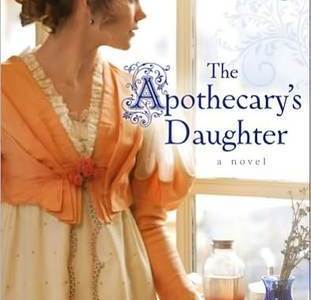
The Apothecary’s Daughter by Julie Klassen
Julie Klassen is a popular author; you may already be familiar with her work. If not, you’re in for a treat. She writes beautifully about women of Jane Austen’s era, from many walks of life. The Apothecary’s Daughter tells a story of a fascinating profession.
An apothecary, of course, was more or less what Americans would now call a pharmacist, and British people would call a chemist. However, things were more flexible in Austen’s time, and an apothecary, like Mr. Perry in Emma, might also make house visits, diagnose illnesses and prescribe medicine. Changes were happening, though, and one new law restricting apothecaries causes problems in the story.
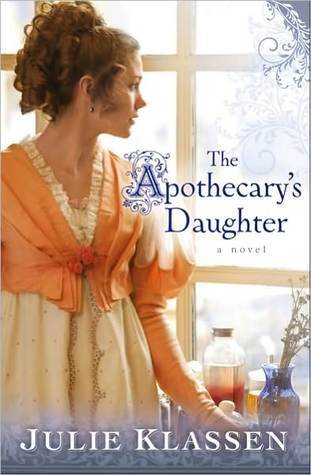
Lilly is an apothecary’s daughter, a gifted apothecary herself though she is not allowed to practice openly because she is a woman. Her brother is handicapped and not able to take over their father’s business.
Lilly longs for new horizons, though. When she has an opportunity to stay with her aunt and uncle in London, several men are interested in her, but she has to hide her humble beginnings. When her father falls ill, her responsibility to her family takes priority, and she returns to her village. Family secrets are gradually revealed, and her various romances keep you guessing until the end.
Lilly is a compelling character who is trying to find her path in life. Other people in the novel—her father, her brother, her neighbor, her suitors, are also interesting.
I love Klassen’s descriptions of the apothecary’s life and the remedies used for various illnesses. She gives quotes at the beginning of each chapter from books of the time about apothecaries and the herbs and potions they used (two are Jane Austen quotes, I’m happy to say). Klassen has done her homework well and thoroughly knows the world of the English apothecary.
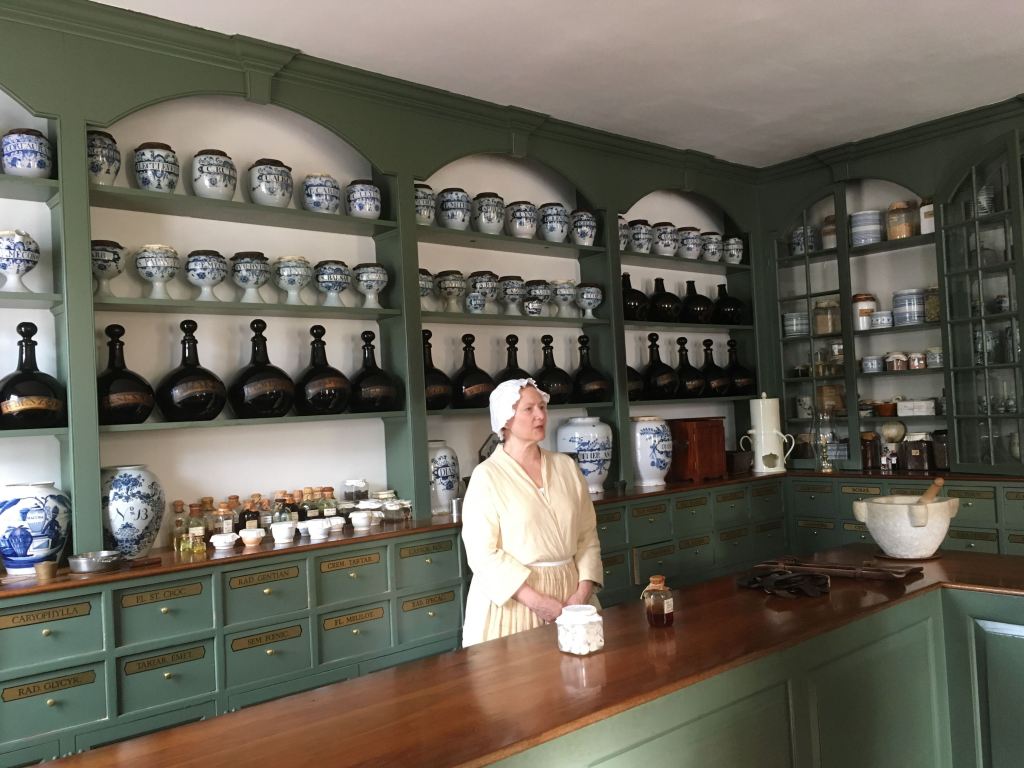
Here’s how she describes the apothecary’s shop, after listing some of the medicines displayed:
The front counter was clear for pressing tablets, and rolling and cutting pills. The rear counter held the tools of the trade. Open for reference were several books, such as Lewis’s New Dispensatory, and Culpeper’s Complete Herbal. Mortars and pestles of various sizes stood at the ready, as did scales, syrup jars, scarificators and bowls for bleeding, and leeches in their jar of water, always kept hungry.
To the left of the rear counter was the door to the laboratory-kitchen, where her father heated and distilled physic [medicine] through snaking copper pipes. To the right was the door to her father’s surgery, the private office where he consulted with or bled patients. –The Apothecary’s Daughter
This book was a good story in itself, and I always love a well-written story that teaches me new things. The Apothecary’s Daughter shows us the life and work of an Austen-era apothecary like Mr. Perry of Emma, as well as the challenges that gifted women and handicapped boys of the time faced. I recommend it to you.
I have enjoyed all of Julie Klassen’s lovely novels set in this period. All are written from a Christian perspective, with mentions of faith that are never overbearing. The romances don’t usually take center stage; as in Austen’s novels. These are essentially stories about people and the challenges they face, with some romance as part of the story. Some of my favorites:
The Lady of Milkweed Manor tells of an unwed mother, cast out by her clergyman father. You’ll learn more about pregnancy, childbirth, and charitable organizations for unwed mothers during this time. Forgiveness is a major theme.
The Painter’s Daughter is another story of a woman deceived by a man. In this case, Sophie, a portrait painter’s daughter, is gifted in painting, but cannot do it openly as a woman.
The Maid of Fairbourne Hall is an engaging story about a lady who masquerades as a maid, showing the challenges of a maid’s life in Austen’s England.
Julie Klassen has written many more excellent novels. Some are on Kindle Unlimited or available from libraries, if you want to try them out. Enjoy!
What gifts and talents has God given you? Is it difficult to balance ways you long to use those gifts, other essential responsibilities in your life, and the expectations of other people? How do you do that, while living as the person you were created to be?
Discover more from Faith, Science, Joy, and Jane Austen
Subscribe to get the latest posts sent to your email.
 Faith, Science, Joy, and Jane Austen
Great post
This blog post was a wonderful insight into the lives of women during Jane Austen’s era and their involvement in science. I loved the descriptions of both Yewspring and The Apothecary’s Daughter and how they seamlessly wove science into the story. My question for the author is, what other novels would you recommend that explore the intersection of science and women’s lives during this period?
Johanna Casiddy
http://www.radiantbeautycare.com/
LikeLike
Hi, Johanna! Thanks for your comment. If you look above under the category Science, then Women of Science, you’ll find various posts on this topic. Here’s the link: https://topazcrossbooks.com/category/science/women-of-science/
I’ve reviewed novels about Mary Anning and Caroline Herschel, both important women of science of Austen’s time, as well as nonfiction about other Austen-era women of science that you might find interesting. Enjoy!
LikeLike