by Brenda S. Cox
“Books—oh! no. I am sure we never read the same, or not with the same feelings.”—Elizabeth Bennet to Darcy, Pride and Prejudice
A farmer’s wife named Mary Bacon lived some miles north of Chawton, where Jane Austen spent her final years and wrote or rewrote all of her published books. Mary’s ledger/household book covers the years 1789-1807, when Jane lived in Steventon and in Bath. Mary Bacon’s reading shows us that religion was very important in her daily life.
Her jottings give us insights into the life of a different class of people: the class of Robert Martin and his family, in Emma. Emma considers her friend Harriet “superior to” this class of society, although Mr. Knightley thinks very highly of Martin.
Robert Martin reads the Agricultural Reports and Elegant Extracts, which included selections from many moral and religious books. Harriet reads novels, and recommends them to Martin. When she becomes a farmer’s wife, how will her reading change?
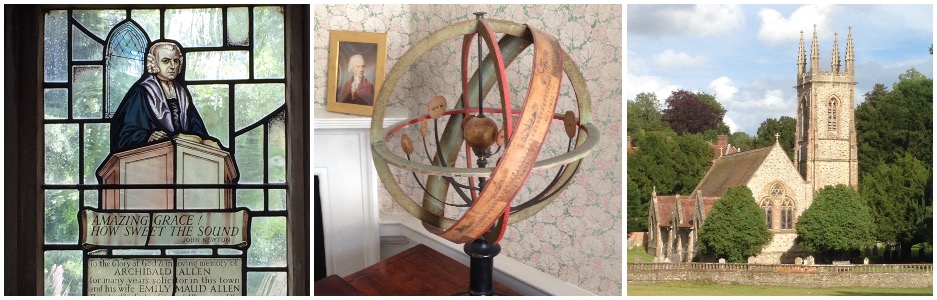
In Mary Bacon’s household book, she lists the books, tracts, and papers she owned. To Mary Bacon, as presumably to many other “ordinary” people of her day, religion was very important. The books she listed include:
- five Bibles (some inherited from her parents),
- six copies of the Book of Common Prayer,
- two Psalters (books of the Psalms used in worship and sometimes sung),
- four “singing books” including hymns (by Watts), Divine Songs, and Williams New Universal Psalmodist singing book. The hymn books were most likely for singing at home, as hymns were still not widely accepted in Church of England services.
- four books explaining the Catechism (a series of questions and answers about the faith designed to teach basic doctrine to children and adults); two of these books are specifically for children),
- two books of sermons,
- a history of the Jews, and
- eighteen other religious books or tracts.
Out of sixty-one items listed, there are only eighteen non-religious books, including Methodist clergyman John Wesley’s Primitive Physic (advice on curing diseases), books on astronomy, local laws, caring for the land, and caring for horses, and sensational stories of the day, but no novels.
Mary was not unique in the books she owned. Books like hers were constantly advertised in the local newspaper. More than 200 religious books were published in England each year. Tracts encouraging a godly life were popular and were sold at fairs and by peddlers.
Mary Bacon also copied out long passages from various sources into her journal, and more then half of those were related to religion. They include some fanciful stories, like a story where Judas, who betrayed Jesus, is said to have, like Oedipus, killed his father and married his mother. A story about Pontius Pilate, who condemned Jesus to death, shows Pilate coming to a bad end. Bacon also copied out, or possibly composed herself, a long poem about the life of Joseph which follows the biblical story very closely.
Her ledger/household book also includes advice, recipes, herbal remedies, agricultural information, lists of expenses, a household inventory, and much more.
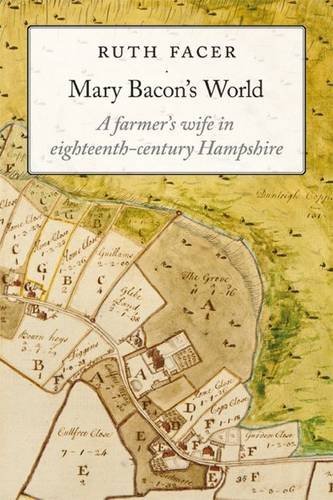
Mary Bacon’s World: A farmer’s wife in eighteenth-century Hampshire, (UK link), by Ruth Facer, explores the life of this farmer’s wife who lived from 1743-1818, covering Austen’s lifetime (1775-1817). It gives a fascinating peek into the everyday world of Jane Austen. Perhaps Harriet Smith, once she became Mrs. Robert Martin, would have experienced a similar life. And, since clergymen were also farmers (farming the glebe land belonging to their livings), much of what is said here probably relates to Austen’s own life as well.
If you were to make an inventory of all the books you own, print or digital, no doubt it would be much longer than Mary Bacon’s 61 items. Of course, in Austen’s time, books were far more expensive, compared to daily wages, than they are now for us. If someone were to examine your list 200 years from now, what might they conclude about your interests and priorities in life?
Discover more from Faith, Science, Joy, and Jane Austen
Subscribe to get the latest posts sent to your email.
 Faith, Science, Joy, and Jane Austen
Very interesting book review, thanks for sharing.
LikeLike
My pleasure!
LikeLike
That’s fascinating to realize that a simple farm family of the day would have owned so many books–and so many on religious subjects–in a day which is generally considered to be irreligious.
Donna
LikeLike
What a great reminder of the abundance we have these days and how quick we are to take it for granted. I certainly have so many more than 61 books! Nice article!
LikeLike