By Brenda S. Cox
“Facts shall speak”—Persuasion
Recently I shared some fiction recommendations that Janeites will enjoy. While we all love fiction, we can also enjoy nonfiction books that help us understand more about Jane Austen and her world. Here are a few that I have appreciated recently.
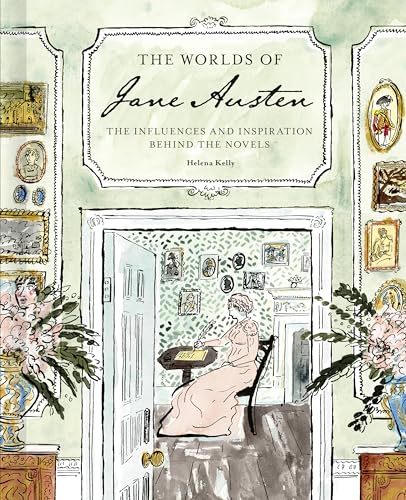
The Worlds of Jane Austen: The Influences and Inspiration behind the Novels, by Helena Kelly
This gorgeous book addresses many aspects of Jane Austen’s world, with beautiful illustrations. Sections cover The Rectory, Revolution, Army and Navy, Education, City, Countryside, Seaside, Empire and Slavery, Legacies, Austenmania, and the Present Day. Kelly focuses on historical and political events and trends in Austen’s world and their connections with Austen and her life.
I saw only a few traces of the controversial ideas Kelly presented in Jane Austen: The Secret Radical (2017). I would like to have seen her include a section on religion, which was a major historical and political influence in this time. But what she did include was interesting and well presented. The book is a feast for the eyes as well as for the mind. A more thorough review is here. An image of mine appears on page 171, by the way. 😊
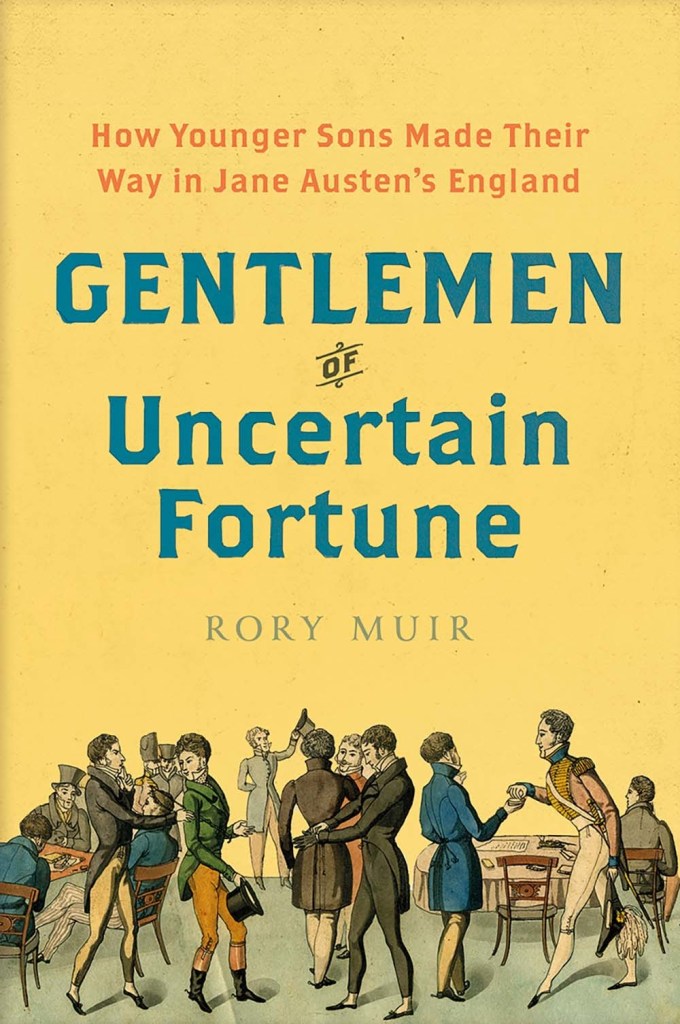
Gentlemen of Uncertain Fortune: How Younger Sons Made Their Way in Jane Austen’s England, by Rory Muir
While this book explores the options for younger sons in Austen’s England, it is also a deep dive into the various gentlemanly occupations of the time. Muir discusses the problem of younger sons of the gentry: the oldest son inherited the family estate; younger sons had to make their own way. Chapters thoroughly explain the occupations they could choose from, including the church, medicine, barristers (top echelon of the law), attorneys and solicitors (lower echelons), banking and commerce, civil office, the Navy (two chapters), the Army, and finally, India (where fortunes might or might not be made, usually not).
Some of these I found fascinating and loved learning all the details. A few, I chose to partially read and partially skim. Appendices give relevant numbers—inflation during the time and numbers employed in various fields.
A few quotes I found interesting:
On the Navy: “Only about one fifth of all naval officers came from the landed gentry and nobility; a second fifth had fathers who were themselves in the navy; and most of the remainder came either from the professions or from the world of commerce . . . [ranging] from small shopkeepers to wealthy merchants.” (This makes the Navy an occupation where men could rise from low degree, as Sir Walter Elliot complains.)
On Medicine: “Most of the medicine practised by a provincial surgeon-apothecary . . . was relatively simple and moderately effective.” (I always thought what doctors did back then was mostly useless, so this was a revelation to me.)
On the Church: “A clergyman needed to have faith, and in most circumstances . . . the faith could be taken for granted. The truths of revealed religion as interpreted by the Church of England were well established and needed to be expounded and explained to a congregation that already accepted them, not debated with sceptics. A clergyman was also meant to demonstrate religious virtues by the life he led, although in many cases this did not extend far beyond avoiding the most obvious vices and attending to some of the needs of his parishioners. Humility, poverty, self-sacrifice and temperance were not the characteristics most commonly associated with the clergy of the Church of England under the Georges.”
If you want to learn about any of these specific fields during Austen’s time (like maybe you want to understand more about Wentworth’s life in the Navy, Mr. Parry’s position as an apothecary, or Mr. Phillips’ prospects as a country attorney), this is the book for you. JAFF writers should find it invaluable. Available through Kindle Unlimited and elsewhere.
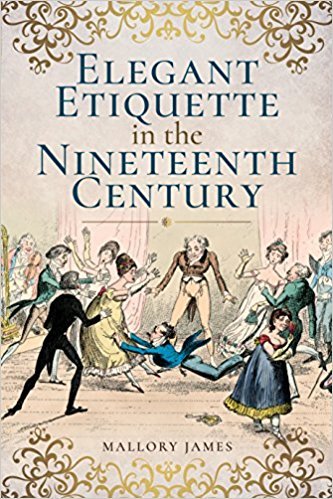
Elegant Etiquette in the Nineteenth Century, by Mallory James
James has dug deep into handbooks of etiquette and polite behavior followed in various parts of the nineteenth century. The writing is sometimes overly formal, but the information is quite interesting. Austen’s England must have been a complex time in which to live. Chapter one considers rank, precedence, and title: what to call people, who would go in first to dinner. Why does Mary Musgrove, daughter of a baronet, take precedence over her mother-in-law (and why do her sisters-in-law complain of it)? Why does Lydia, once she is married, take precedence over her older sister Jane, who previously would have taken precedence over Lydia? Such mysteries were clear to people of that time, but not to us today.
Later chapters go into other areas of etiquette. Here are tidbits from some of them:
“Good Company and Introductions”: The person performing an introduction had to first make sure the person of superior rank approved. The person of lower rank was supposed to be introduced to the person of higher rank (except ladies were always given precedence over gentlemen); thus Collins introducing himself to Darcy was out of line.
“Proper Conduct whilst Out and About”: It was inappropriate for a young lady to venture out alone in London, but in the country “she could have gone between the houses of friends and relations on her own with complete respectability”; thus the Bingley sisters are wrong in judging Elizabeth for going out alone in the country—they are thinking of London standards.
“Paying Calls and Leaving Cards”: “Newcomers needed to wait for the established residents of a locality to pay the first call upon them, or to leave the first card,” which is why Mr. Bennet has to call on Mr. Bingley before their families can be acquainted. Once a neighbour had visited, it was polite to return the visit as soon as possible, as Bingley does.
“Dining with Delicacy”: “Ladies and gentlemen would have gone into the dining room according to their order of precedence.” So Mary Musgrove, daughter of a baronet, would enter the dining room before her mother-in-law, wife of a country squire.
“Appropriate Ballroom Behavior”: “Throughout the century, ladies and gentlemen who did not know a dance were exhorted to abstain from attempting it in a ballroom.” Mr. Collins, take note. “Ladies were advised that they should never dance with a gentleman who had not been properly introduced to them.” So Catherine and Henry Tilney can’t dance until the Master of Ceremonies introduces them.
Later chapters address “Conversation and Correspondence,” “Employment of Domestic Servants,” “Courtship, Marriage and the Etiquette thereof,” and finally “Particular Hints” for ladies, and for gentlemen. The author may sometimes provide more detail then necessary, and some behavior changed through the century. However, James usually tells us dates for different manuals, so we can see what applied in Austen’s time and what was more Victorian.
Overall, I found lots of interesting insights here into Austen’s world, when “etiquette” was much different than what we practice today. Available through Kindle Unlimited and elsewhere. This would also be a valuable resource for JAFF writers.
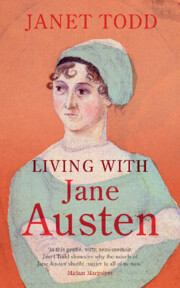
Living with Jane Austen by Janet Todd
Scholar Janet Todd takes us on a country ramble through Austen’s novels and life, with fascinating insights along the way. She talks about the significance of country estates in the novels, the “dark,” patriarchal side of Darcy and Sir Thomas Bertram, social class prejudices, nature, advice, the body, health, and death. I’ll be reviewing this more thoroughly on the website Jane Austen’s World, on January 21.
Happy reading!
I try to balance fiction and nonfiction in my reading. The best fiction can teach us deep truths about life. Well-researched, thoughtful nonfiction can teach us other truths. What books have ministered to your mind and soul recently?
Discover more from Faith, Science, Joy, and Jane Austen
Subscribe to get the latest posts sent to your email.
 Faith, Science, Joy, and Jane Austen
Thank you for these recommendations. They’re in my cart, and I know they will be a great help to me. I’m working on chapter 4 of my own book. Cheers, Brenda!
LikeLike
Great! I’m glad it was helpful. So many great resources out there!
LikeLike
Brenda, Thanks for the helpful book reviews. I’ve included that blog on my page about the cultural restrictions and societal strata of Austen’s day: https://austenland.org/janes-world/janes-world-index/ (https://austenland.org/janes-world/janes-world-index/) BTW, my blog is just a place to store my notes from personal reading and occasional reading club leadership, so it’s hardly extensive. Thanks for your helpful work, – Paul Race
LikeLike
Thanks, Paul! Your blog looks like a good resource also!
LikeLike
I appreciate this list as well! I have a couple of these but always enjoy finding out about other books on the era!
LikeLike
Great! I hope you’ll enjoy some new ones!
LikeLike